jueves, 10 de noviembre de 2011

NOVEMBER WEATHER. CLIMATE IN NOVEMBER.

November About this sound (listen)  is the 11th month of the year in the Julian and Gregorian Calendars and one of four months with the length of 30 days. November retained its name (from the Latin novem meaning "nine") when January and February were added to the Roman calendar.
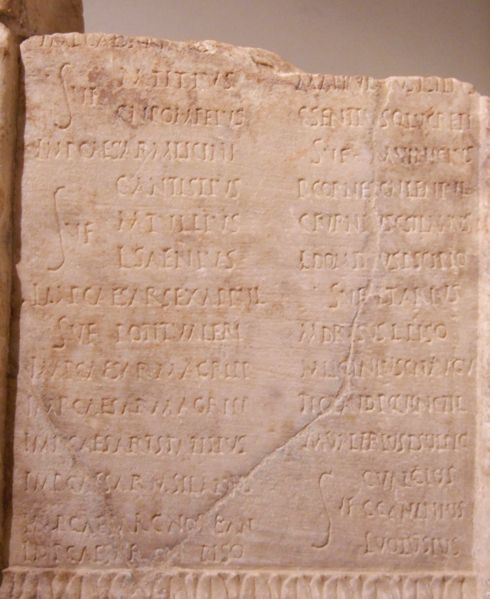


November is a month of spring in the Southern Hemisphere and autumn in the Northern Hemisphere. Therefore November in the Southern Hemisphere is the seasonal equivalent of May in the Northern Hemisphere and vice versa.
November starts on the same day of the week as February in common years, and March every year. November ends on the same day of the week as August every year.
In the pagan wheel of the year, November begins at or near Samhain in the Northern Hemisphere and Beltainein the Southern Hemisphere.


November symbols

Chrysanthemum


File:TopazUSGOV.jpg

Events in November

Thanksgiving is celebrated in November

[edit]Month-long observances

[edit]Movable events

First Tuesday
  • In Australia, the Melbourne Cup horse race is held annually on the first Tuesday in November.
Tuesday After the First Monday
Third Wednesday
  • GIS Day is held the third Wednesday of November during Geography Awareness Week.
Third Thursday
  • The Great American Smokeout sponsored by the American Cancer Society occurs on the third Thursday of November, one week before Thanksgiving. Smokers are encouraged to quit smoking for these 24 hours, in hopes that they will quit forever.
Fourth Thursday in the US
  • Americans celebrate Thanksgiving on the fourth Thursday of November.
The day after Thanksgiving in the US
Monday immediately following Thanksgiving Day in the US


Nicaragua Weather and Climate

Best time to visit: 
The climate in Nicaragua differs according to region, so the best time to go varies. The climate is tropical for most of the country. The dry season is from December to May, and the rainy season is from June to November. On the Pacific side the rainy season runs from May to November. Summer and the dry season, is November to April, with the busiest time being from December to March. The climate on the Atlantic side can be very temperamental and can often be rainy.
Required clothing: 
Lightweight cottons and linens are required throughout the year. Waterproofs are advisable during the rainy season. Warmer clothes are advised for the northern mountains.
Geography:
Nicaragua borders Honduras to the north and Costa Rica to the south. To the east lies the Caribbean, and to the west the Pacific. In the north are the Isabella Mountains, while the country's main feature in the southwest is Lake Nicaragua, 148km (92 miles) long and about 55km (34 miles) at its widest. The island of Ometepe is the largest of the 310 islands on the lake. These islands have a reputation for great beauty and are one of the country's main tourist attractions. Lake Managua is situated to the northwest. Volcanoes, including the famous Momotombo, protrude from the surrounding lowlands northwest of the lakes. The country's main rivers are the San Juan, the lower reaches of which form the border with Costa Rica, and the Rio Grande. The Corn Islands (Islas del Maiz) in the Caribbean are two small beautiful islands fringed with white coral and palms. They are very popular as holiday resorts with both Nicaraguans and tourists.

Climate & when to go

Nicaragua has a range of microclimates, and it's always worth checking the weather to see where you want to go first. On the Pacific side, invierno (winter), or rainy season, runs May to November, at its rainiest in September and October when sea turtles nest 3000-strong to a beach. Verano (summer), or dry season, is November to April, the best time for hiking, camping and partying, as it coincides with high tourist season (December to March), most pronounced along the Costa Rican border. Asverano desiccates to a close, the Pacific forests lose their leaves and lake levels drop revealing sandy lake beaches that you'll put to good use as temperatures soar from the normal high 20s into the mid-30s or worse.
And then there are the mountains, from the islands of cool cloud forests atop each volcano to the monolithic granite peaks of the central highlands, where the seasons become blurred in the chilly misty mornings, with temperatures between 12°C and 24°C. On the Atlantic side rainy and dry seasons are almost entirely academic, so check the weather; along the Río San Juan, one of the wettest places on earth, always pack a raincoat.
The climate in Nicaragua differs according to region, so the best time to go varies. The climate is tropical for most of the country. The dry season is from December to May, and the rainy season is from June to November. On the Pacific side the rainy season runs from May to November. Summer and the dry season, is November to April, with the busiest time being from December to March. The climate on the Atlantic side can be very temperamental and can often be rainy.

Required Clothing
Lightweight cottons and linens are required throughout the year. Waterproofs are advisable during the rainy season. Warmer clothes are advised for the northern mountains.

CLIMA DE NICARAGUA EN NOVIEMBRE / TEMPORADA DE VERANO.

Noviembre es el undécimo y penúltimo mes del año en el calendario gregoriano y tiene 30 días. Su nombre deriva de novem (‘nueve’ en latín), por haber sido el noveno mes del calendario romano. Retuvo su nombre «noveno» aun cuando al año se le agregaron los meses de enero y febrero.

Archivo:Kalender.jpg

La piedra de noviembre es el topacio, y su flor, el crisantemo.

Archivo:Topaze Brésil.jpg

Archivo:Chrysanthemums.jpg

Al principio, se representó a noviembre bajo la figura de un sacerdote de la diosa Isis vestido con una túnica de lino con la cabeza calva y apoyado en un altar sobre el cual había una cabeza decabrito, animal que se sacrificaba a la diosa en el mes de noviembre.

Archivo:Ägyptischer Maler um 1360 v. Chr. 001.jpg

Los modernos lo representan bajo la forma de un personaje vestido de hoja seca con una mano apoyada en el signo de Sagitario y la otra sosteniendo un cuerno de la abundancia, de donde salen ciertas raíces, último presente que nos ofrece la tierra.1

Acontecimientos en noviembre


El clima de Nicaragua es de temporada veraniega entre noviembre y abril 

Es un país de contrastes, de hecho, la temperatura y el clima pueden cambiar mucho de una costa a la otra. La zona oeste es muy seca y con poca lluvia, y temperaturas altas, la zona central tiene un clima frío y húmedo, y la costa caribeña, la del este, tiene un clima tropical con altas temperaturas y muy húmedo, y las lluvias suelen ser torrenciales.

Nicaragua tiene un clima tropical, y se puede dividir en tres regiones climáticas: a lo largo de la costa del Mar Caribe, a lo largo de la costa del Océano Pacífico y por el norte la región montañosa. El calor es más soportable de diciembre a abril, y es muy caliente especialmente al inicio de la temporada de lluvias. 

La costa que se enfrenta al Océano Pacífico se caracteriza por una estación seca que va desde diciembre hasta abril, mientras que la temporada de lluvias es entre mayo y noviembre, la temperatura media en esta zona del país son de 27°C, mientras que el promedio de la precipitación anual es de 1900 mm.

La costa del mar Caribe más lluviosa, aquí la temporada de lluvias es larga 9 meses, mientras que la estación seca es entre marzo y mayo, las temperaturas medias anuales son de 26°C, mientras que el promedio anual de precipitaciones es de 3.800 mm, en septiembre y octubre pueden ser los huracanes. 

La región montañosa del norte tiene un clima más fresco, con temperaturas medias anuales de 18°C, en este ámbito, la precipitación anual promedio es de 1000-1500 mm, concentrada en los meses entre mayo y octubre. La mejor época para visitar Nicaragua es la estación seca de diciembre a abril.

Nicaragua se encuentra en la zona climática tropical, y por lo tanto presenta condiciones térmicas similares durante todo el año. Debido a su posición en la franja costera de océano Atlántico, y su carácter montañoso, podemos encuadrar su clima en el clima monzónico y de los vientos alisios en el litoral. Nicaragua se encuentra en el imperio biogeográfico y la ecozona Neotropical. Por su posición, Nicaragua recibe el impacto frecuente de los huracanes que se generan en el Atlántico y las sequías provocadas por El Niño.
La biocenosis típica en la costa del caribe y las regiones bajas es el bosque ecuatorial semiombrófilo, que pasa a bosque monzónico a medida que se asciende, y llega a la sabana en las zonas más altas. En la costa encontramos abundantes manglares.
El clima nicaragüense presenta dos estaciones bien marcadas, una lluviosa y otra seca. En general la época de lluvias se extiende de junio a noviembre, y la seca de diciembre a mayo. Durante la estación seca muchos de los árboles del bosque semiombrófilo pierden la hoja. No obstante, existen grandes diferencias entre la costa atlántica y la pacífica. La costa del Pacífico es considerablemente más seca que la del Caribe. La zona central y montañosa de Nicaragua tiene un clima más frío y húmedo, especialmente en el este. La costa caribeña es más húmeda, con altas temperaturas y fuertes precipitaciones.
Las temperaturas en Nicaragua son muy estables aunque se pueden diferenciar tres zonas. Las tierras bajas (Pacifico y Atlántico) las temperaturas varían de 22 a 30 ºC. El máximo se alcanza en mayo (38 ºC). La parte central del país es más fresca, y las temperaturas media disminuyen unos 5 ºC. En las montañas, sobre todo las del norte el descenso es de hasta 10 ºC.
Según el Instituto Nicaragüense de Estudio Territoriales podemos diferenciar cuatro tipos de clima:
Clima de sabana tropical, que se extiende por la zona del Pacífico y las estribaciones occidentales del macizo montañoso central. Tiene unas temperaturas medias de entre 21°C y 30°C y máximas hasta 41°C. Se caracteriza por una estación seca de noviembre a abril, la precipitación anual máxima es de 2.000 mm y la mínima entre 700 y 800 mm anuales.
Clima de sabana tropical de altura, que corresponde a zonas localizadas en altura superior a los 1.000 metros sobre el nivel del mar. Se trata de una región en la que están presentes las modificaciones originadas por la altitud, aunque se pueden reconocer las características del clima zonal, las precipitaciones aumentan y las temperaturas se sitúan entre 10 y 25 °C.
Clima monzónico tropical, que se caracteriza por tener una estación lluviosa de nueve meses, con una estación seca de febrero a abril. Las precipitaciones promedio anual varían entre 1.800-2.000 mm en las vertientes orientales de la cordilleras del macizo central, hasta las 3.000 mm en la porción central del Atlántico. La oscilación media anual de la temperatura es inferior a 4°C, situándose entre los 24 y los 26 °C.
Clima de selva tropical, que se extiende por la costa atlántica. Se caracteriza por ser el más húmedo, en el que se registran valores máximos de precipitación anual de hasta 4.000 mm. Las temperaturas medias del mes más frío es superior a los 18°C.
La vegetación de Nicaragua es de naturaleza tropical y subtropical, con especies típicas de América. Abundan los pinos, cedros, caobas, quebrachos, guayacanes y árboles del hule o caucho, y más de 50 variedades de árboles frutales. Entre la fauna de Nicaragua se encuentran el puma, el venado, el jaguar, el pecarí, algunas especies de monos y lagartos, y una amplia variedad de reptiles. Son abundantes los guacamayos (llamados lapas), los colibríes y los pavos salvajes. El guardabarro es el pájaro nacional y la zacuanjoche la flor del país.
En Nicaragua existen dos grandes reservas biológicas: el Río Indio Maíz, ubicado en la región fronteriza con Costa Rica, que representa un bosque húmedo tropical, y los Cayos Misquitos (Miskitos); al noreste del país. También existen tres parques nacionales, Archipiélago Zapatera, Saslaya y Volcán Masaya.


jueves, 20 de octubre de 2011

VILLAS OUTSIDE AND VILLAS INSIDE. VILLAS POR FUERA Y POR DENTRO.


Bahia del Sol Villas & Condominiums is located behind La Talanguera neighborhood, from the Mayor's Office or the Civic Centre 2.5 kms north on the right side of the dirt road that goes to the Chocolata. Another reference on how to get to Bahia del Sol is that after crossing the hanging wooden bridge that crosses the estuary of San Juan del Sur keep going for 700 meters north and to the right there is a green large placard that reads WELCOME TO HOTEL BAHIA DEL SOL VILLAS & CONDOMINIUMS.

Our property has 9 villas, and 2 pools.
1 pool for adults, and 1 children's pool.

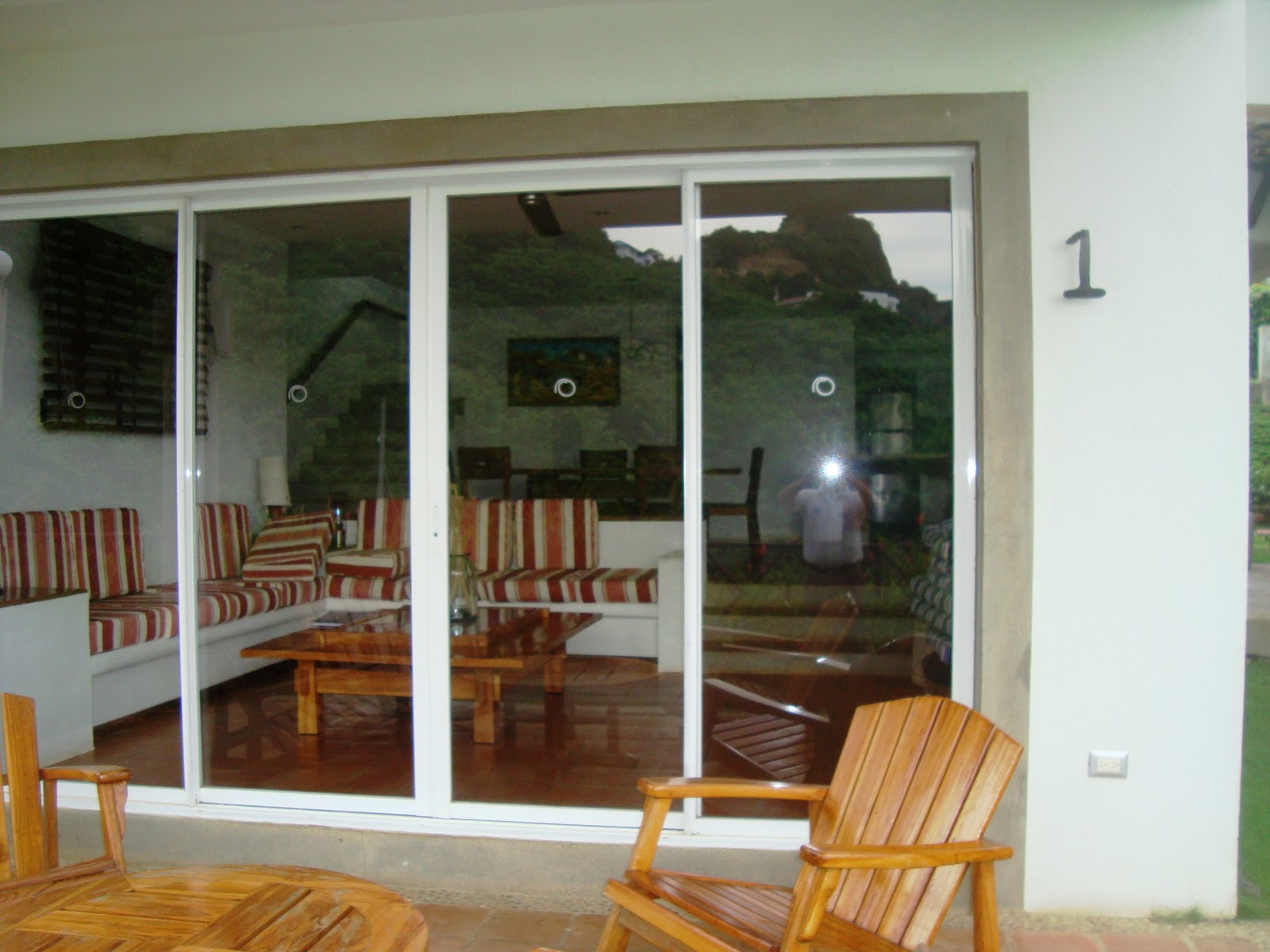
Each villa is made up of 2 floors, and each one feature 3 bedrooms, 2.5 bathrooms, living room, dining room, and kitchen.

In the master bedroom there is 1 King size bed, the second bedroom 2 twin size beds, and the third bedroom 1 queen size bed. On the top floor (second floor) the 3 bedrooms are located. The main room with 1 king size bed has its own private bathroom, and the other 2 rooms share a bathroom. The rooms have central air conditioning and the master control is located in the main room. On the ground floor we have the living room, dining room and kitchen. On this floor we have a ceiling fan and a half bath (a toilet).

The check in time is at 03:00 pm, the time of check out is at 01:00 pm. To confirm and guarantee a reservation is requested information from a credit card to charge the first night, or it can be guaranteed by a deposit or bank transfer.

The pools are open from 07:00 am to 10:00 pm every day for the exclusive use of guests at Bahia del Sol Villas & Condominiums.

RESERVATION AND CANCELLATON POLICIES:
·         Rates are per villa, per night for 6 pax. Six guests are included in the cost of each accommodation. Each additional adult will be charged US $30 plus tax per night (children 3 -12 years old, US $10 plus tax per night). There is no charge for children under 3 years old. Children for 3 years old and up are included in rates.
·         Rates do not include 15% tax and 2% Intur Tax.
·          Rates are subject to change.
·         Easter week minimum of 4 nights stay.
·         Christmas and New Year minimum of 5 nights stay.
·         Prepayment: Due to Bahia del Sol is a small hotel size prepayment is necessary. A deposit of one night is required at the time of making your reservation and to guarantee the villa space. 6 weeks (40 days) prior to the arrival date at Bahia del Sol, total amount of the reservation needs to be prepaid.
·         Cancellations made more than 25 days prior to arrival will charge US $100 fee.
·         Cancellations made within 25 days of arrival will charge a 30% penalty on the TOTAL VALUE of the reservation.
·         Cancellations made within 7 days of arrival will cost 100% on the total value of the reservations.
·         No shows will be charged 100% of costs. . No-shows and early departures are considered cancellation.
·         Some Special Rate reservations are charged immediately and are non-changeable and non-refundable.
·         Bank account:
1.       Dollar: 013-06019-9
2.       Cordoba: 013-05989-4


IMPORTANT NOTES:

• Rates do not include breakfast, lunch or dinner, however, if requested in advance we can hire a private cook to prepare you meals in the kitchen of the villa. You just bring the ingredients or you can order in advance that we buy the ingredients here and we can add it to your bill.

• We have parking near the homes and security 24 hours a day.

• The maid service is available for each villa from 8:00 am to 05:00 pm for 1 single cleaning, but in the period between 12:00 and 01:00 pm, we do not have maid service, but you can ask for it before or after these hours and they will respond in the order that was ordered.

• Towels can be washed daily can be changed daily.

• Bed linen is changed every 3 days during your stay.

• For washing dishes in the kitchen, the maid gives you this service once in the day, and extra dish-washings will be added to your bill at $ 5.00 each time you request it.

• The first materials or supplies such as purified water bottle, paper towels, matches and toilet paper are included in the fee for the first time, if you want a second extra bottle of purified water, extra paper towels or extra toilet paper, they will be charged to your bill.

• If you want soap, shampoo, conditioner or lotion, you can request extra fluid without any extra charge.

• Every refrigerator in each villa is stocked with alcoholic and non alcoholic beverages for the enjoyment of guests for an additional fee not included in the price, which can be added to your bill.

• If you want ice or extra drinks you may request them, and is charged to your bill.


• We do not currently have any bar-restaurant on the property, but you can call some establishments in San Juan del Sur who deliver packaged food to carry home, or you can request a private cook for your villa in advance.

• No pets in the villas or in the pools are allowed.

• If in doubt about something we have or not have in the villas please contact us in advance.


For more information or assistance, please contact us by phone or via email.


Emails: reservations@bahiadelsolnica.com, info@bahiadelsolnica.com, operaciones@bahiadelsolnica.com

Tels: 505-25682828, 505-87392040-505-89099300


viernes, 30 de septiembre de 2011

SURFING IN SAN JUAN DEL SUR, RIVAS, NICARAGUA.


San Juan del Sur is located just north of Costa Rica. It is a fun little beach town and very inexpensive (the whole country is). This is a mecca for surfers although there isn't surfing right on the beach in San Juan del Sur. The town itself is poor and run down but it does have some nice places to eat, drink and play. There are also some fun excursions to see giant turtles and other wildlife while here.

Once upon a time, San Juan del Sur was a locals-only hideaway. It didn’t take long for intrepid travelers to seek out the paradisaical, crescent-shaped bay. Now, San Juan is a joyful merging of cultures—still uncrowded and drop-dead gorgeous, yet with enough American appetizers and air conditioners to make most foreigners happy.
San Juan del Sur’s small-town lifestyle is centered around the sea. In fact, the majority of San Juan’s residents make their living from it, fishing or managing dive and snorkel tours in and beyond the picturesque bay. International travelers also find San Juan’s waters superlative for surfing, fishing, and other water sports, and its neighboring beaches ideal for embracing the Nicaraguan beachfront mantra: Relaxation, with a capital R.
What to Do:
If you’re looking for bustling nightclubs and exclusive resorts, stay in Cancun. San Juan del Sur’s attractions and amenities are much more modest—which, in many ways, is a good thing. As mentioned, the Pacific ocean is rife with possibilities, from Scuba diving to deep-sea fishing to surfing (especially at Playa Maderas, twenty minutes away). Playa Maderas is a twenty-minute cab ride (make that an extremely bumpy cab ride]fromSan Juan del Sur in Nicaragua, and is one of the Nicaragua surf center's top surfing beaches. 

Surfing is synonymous of traveling, discover the South Pacific of Nicaragua. 

San Juan del Sur is one of the best destinations in 
Central America for surfing, with over 60 kilometers of 
Pacific coast in southern Nicaragua. 

The shores near San Juan del Sur have a 
topography ideal for creating good waves. The 
irregularity offers a multitude of options swell 
and thus, the highest density of different waves in all 
the country. 

It is also the most consistent area, frequent 
winter waves are breaking among others, in Playa 
Yanque, Playa Hermosa, Playa Maderas, Popoyo, Playa Los Perros and Playa Manzanillo
considered this as one of the 
best left in Central America. 
Adventuresome travelers can rent horse or a bike and explore the coastline. Or they can journey by foot, hiking among San Juan’s volcanic hilltops and enjoying the remarkable views, spanning all the way to Costa Rica!
But the best part of a San Juan vacation is embracing the village’s carefree Pacific lifestyle. Sway in a hammock to reggae beats and work on your tan. Buy your dinner fresh-caught from the fishing boats -- or if you’re blessed with the necessary skills, catch it yourself! Stop by La Flor beach, where sea turtles waddle ashore to lay their eggs in late autumn.
When to Go:
San Juan del Sur holds a fiesta to commemorate its patron saint, San Juan (who else?), on June 22nd. Easter week, or Semana Santa, is another time of exuberant celebration. San Juan’s climate is warm and pleasant all year around, though rain showers are more frequent late in the year.
From Managua, a cab to San Juan del Sur should cost about $100 US. If you’re on a budget, catch a public bus to Rivas. From there, you can catch another bus to San Juan del Sur. Buses also head to Rivas from the Costa Rican border at Penas Blancas. Or if the timing is right, you can catch an air-conditioned express buses from Managua direct to San Juan—they leave each day at 4pm.
Once you’ve arrived, the best choice of transportation is your feet.
Fun Fact:
If you stroll up to the lighthouse south of San Juan’s bay, you’ll find the ruins of William Walker’s fort. Walker was an American soldier who reigned as Nicaragua’s president from 1856-1857, but was executed by the Honduran government in 1860.


miércoles, 14 de septiembre de 2011

STAY 3 NIGHTS AND PAY 2 NIGHTS ONLY.


FROM SEPTEMBER 19th 2011 TO SEPTEMBER 30TH 2011

TAKE ADVANTAGE OF OUR DISCOUNTS AND SPECIAL RATES THAT YOU WON'T FIND AT ANY HOTEL OF OUR COMPETITORS IN SAN JUAN DEL SUR, LET ALONE WITH SIMILAR UNITS OR LIKE OURS.


STAY 3 NIGHTS AND PAY FOR 2 NIGHTS ONLY (US$234 EACH NIGHT). IF YOU CANNOT STAY 3 NIGHTS IN A ROW, STAY 2 NIGHTS ONLY, AND PAY US$175.50 EACH NIGHT FOR 6 PEOPLE MAXIMUM IN A VILLA.


domingo, 11 de septiembre de 2011

ALOJATE 3 NOCHES Y PAGA SOLAMENTE 2 NOCHES

DEL 19 DE SEPTIEMBRE 2011 AL 30 DE SEPTIEMBRE 2011

APROVECHA NUESTRAS DESCUENTOS Y TARIFAS QUE NO ENCONTRARAS EN HOTELES DE LA COMPETENCIA EN SAN JUAN DEL SUR MUCHO MENOS CON UNIDADES SIMILARES O IGUALES A LAS NUESTRAS. DEL 19 DE SEPTIEMBRE AL 30 DE SEPTIEMBRE 2011 QUEDATE 3 NOCHES Y PAGAS 2 (US$234 cada noche). SI NO PUEDES QUEDARTE LAS 3 NOCHES QUEDATE 2 NOCHES Y PAGAS US$175.50 CADA NOCHE POR 6 PERSONAS MAXIMO EN UNA DE NUESTRAS VILLAS.